staircase baserails: which type, timber and size do you need?

A baserail is the horizontal timber rail that runs along the base of a staircase balustrade, fixed either to the stair string or to the landing floor. It sits parallel to the handrail, and its job is to anchor the bottom of every spindle in the run. Without it, spindles have nothing to fix into and the balustrade has no lower structure.

If you’re replacing or specifying spindles, a baserail is the part you fit them into; if you’re matching an existing staircase, it’s the part that has to align with your newel posts and handrail in both timber and dimension.

grooved or ungrooved - which baserail type do you need?

This is the decision that determines everything else, so it comes first.

A grooved baserail has a channel running along its top face, typically 32mm or 41mm wide. The foot of each timber spindle slots into this, and is held by infill strips between them. This is the standard choice for traditional turned timber spindles and is what most domestic staircases use.

An ungrooved baserail has a flat top with no channel. This is commonlu used where spindles are metal (fixed with brackets or shoes) or where the balustrade uses glass panels (fixed with channel clamps rather than a timber groove).

If you already have spindles you’re matching to, check their base: a turned, square-foot timber spindle needs a grooved rail in the matching width; a metal spindle or glass panel needs an ungrooved rail with the appropriate fixing hardware.

choosing your timber: oak, pine, ash, hemlock and sapele compared

Grosvenor Stairs supplies baserails in five timbers, and choosing the right one depends on what the rest of your staircase is made from:

Oak has the most pronounced visible grain of the five and takes oil or varnish well rather than paint – it’s the choice if your newel posts and handrail are also oak, or if you want the grain to show through a clear finish. It’s also the densest of the five, which gives it the best resistance to dents and wear at the point where spindles meet the rail.
Shop for oak baserails here ››

Pine is the most budget-friendly option and is typically painted rather than left natural, since its grain is plainer, and it shows surface marking more readily. It’s a sound choice if the staircase is being painted throughout, or for a budget-conscious renovation where the baserail won’t be the focal point.
Shop for pine baserails here ››

Ash is pale, straight-grained, and often described as contemporary or Scandinavian rather than traditional. It’s common to pair it with white-painted spindles and a natural ash or oiled handrail in minimalist homes.
Shop for ash baserails here ››

Hemlock sits between pine and oak: denser and tighter-grained than pine – so it stains more evenly – but more affordable than oak. It’s a practical middle choice if you want a stained (not painted) finish without oak’s price point.
Shop for hemlock baserails here ››

Sapele has a distinctive ribbon figure in the grain that gives a richer, more luxurious appearance under varnish, often at a noticeably lower cost than oak – worth considering if you want a premium look on a tighter budget.
Shop for sapele baserails here ››

Whichever timber you choose for the baserail, matching it to your newel posts and handrail (not just to the spindles) gives the staircase a single coherent finish rather than three different timbers competing for attention.

what size baserail do you need?

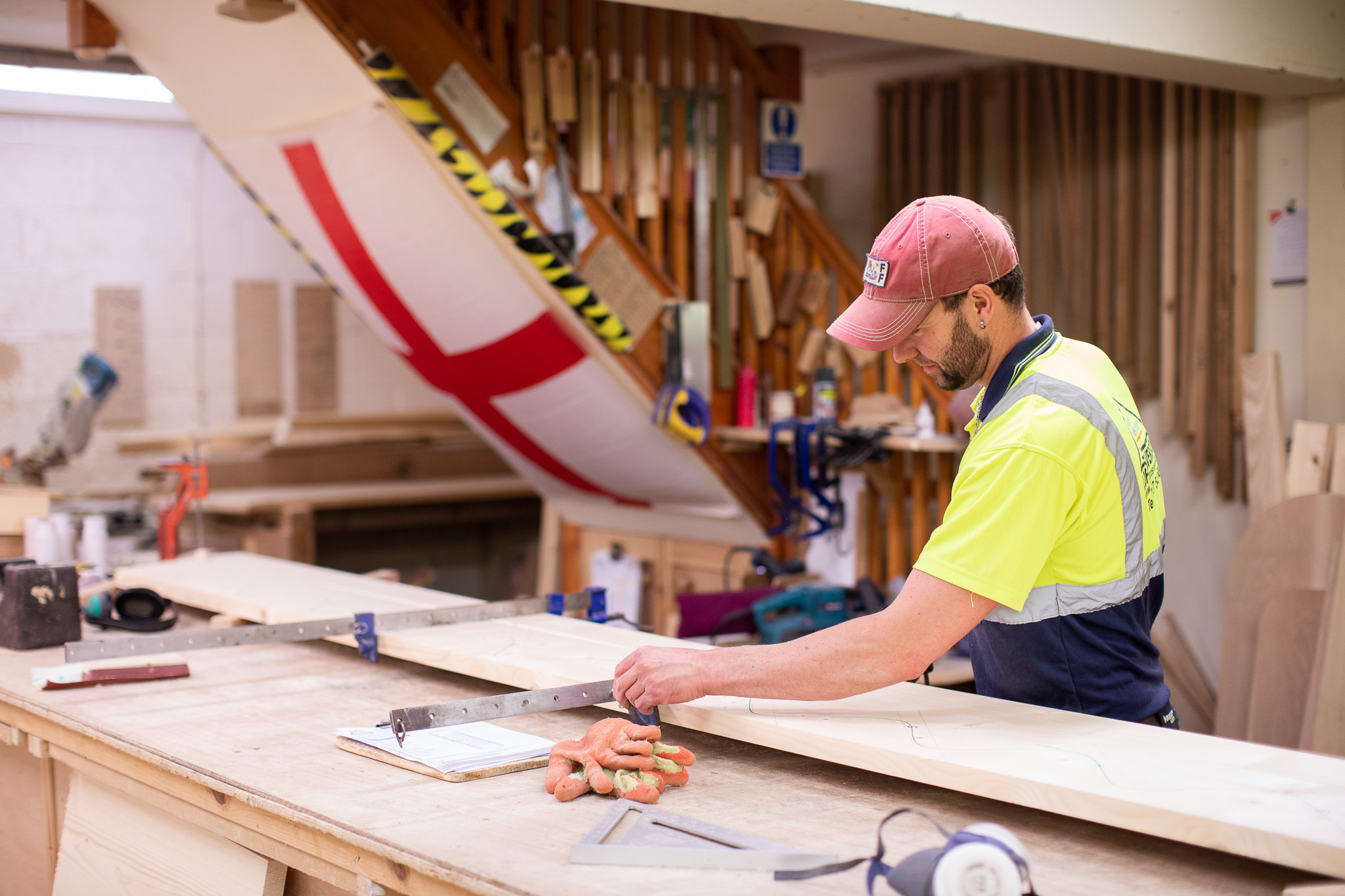
Baserails are supplied in standard stock lengths – most commonly 1.8m, 2.4m, 3.6m and 4.2m – and are cut down to fit, not sold custom-length as standard. To work out what you need:

Measure the full run for a flight of stairs, or along the landing edge (for a landing balustrade), from the face of one newel post to the face of the next. Add roughly 50–100mm of tolerance for fitting and trimming.

If your run is longer than the longest stock length you need, or spans both a flight and a landing at different angles, you’ll need two lengths joined at the newel post rather than one continuous piece. This is standard practice, not a compromise.

If you’re unsure of your measurement, it’s worth ordering the next length up rather than cutting it fine; a baserail can be trimmed shorter on site but can’t be extended.

how a baserail is fitted

On a closed-string staircase, the baserail is screwed directly to the top edge of the string, running the full length of the flight. On a landing, it’s fixed flat to the floor along the edge of the void. Once it’s fixed in place, spindles are either slotted into the groove (grooved rails, secured with infill strips between each spindle) or fixed using the appropriate bracket or clamp system (ungrooved rails for metal or glass). The handrail above is then fitted last, completing the balustrade between newel posts.

This is a job most competent DIYers can do with basic tools, but it depends on accurate, square cutting at the newel post junctions. If you’re not confident measuring and cutting timber to a tight tolerance, this is one part of a staircase project worth handing to a joiner.

Grosvenor Stairs Workshop

our quick baserail FAQ

What’s the difference between a baserail and a handrail?
A handrail runs along the top of the balustrade at hand height and is what you grip when using the stairs. A baserail runs along the bottom, doing the equivalent structural job for the base of each spindle rather than the top.

Can I use a grooved baserail with metal spindles?
No – metal spindles are fixed with brackets or shoes designed for an ungrooved rail. A grooved rail’s channel is sized and shaped for timber spindle feet and won’t accept a metal fixing correctly.

Do I need infill strips with a grooved baserail?
Yes, if you’re using timber spindles. Infill strips fill the groove between each spindle, so the channel doesn’t show as a continuous gap once spindles are fitted.

What’s the standard groove width?
32mm and 41mm are the two standard widths in the UK market, sized to match the most common turned spindle foot dimensions. Always check your spindle width before ordering – the two aren’t interchangeable.

Can a baserail be a different timber from my spindles?
Yes, but for a coherent finished look most staircases keep the baserail, newel posts and handrail in the same timber, with spindles sometimes varying (for example, oak rails and posts with painted timber spindles).

Matching your baserail to the rest of your staircase

A baserail is one part of a balustrade system that includes spindles, newel posts, and a handrail in the same or a complementary timber.

 If you’re specifying a full staircase rather than replacing a single component, see our staircase handrails, newel posts and spindles ranges to keep the whole run in one timber.

If you’re working on a bespoke project rather than a like-for-like replacement, our bespoke staircases service can advise on the full balustrade before you order individual parts.